
Corvine: Four Lines Youth Storytelling
Four Lines: Youth Storytelling Project honors the voices of four youth—Corvine, Anukalp, Wakinyela, and Kimimila—who share personal stories of climate change grounded in reflection, lived experience, and place.
About the Author
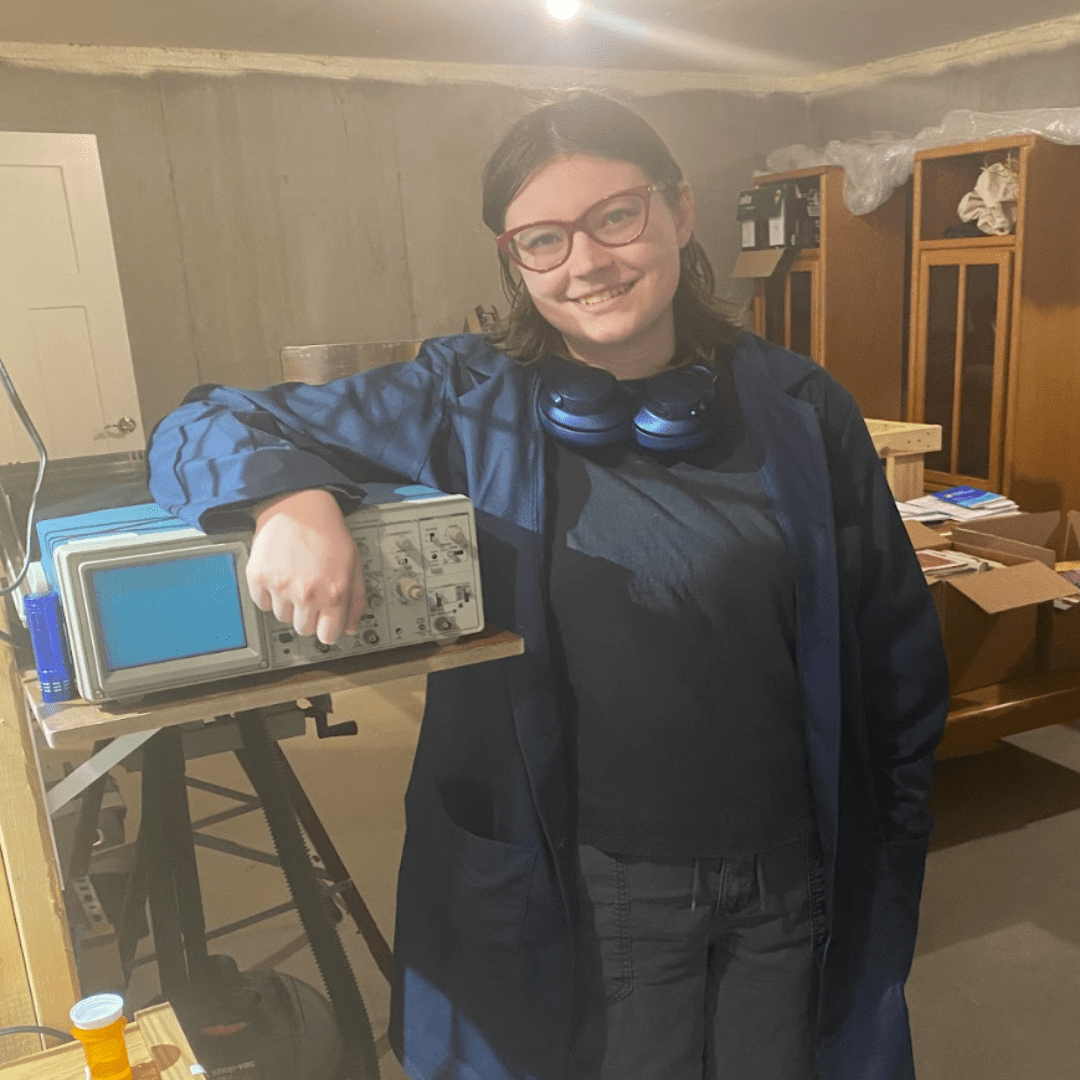
Corvine (they/them, age 22 when this story was written) is a writer that has too little to say and too many words to say it with. They enjoy birdwatching, as well as analyzing poetry and song lyrics.
Corvine's Story Line
“I knew what climate change was, and I know it is something to fear.”
Author’s Note: “I began this piece by thinking of winter as a concept—a season defined by cold and stillness. As the work unfolds, Winter becomes a person, who is referred to with they/them pronouns. This change reflects the way my perspective on Winter has shifted throughout my life. If I could speak to Winter’s pain, any words that I could manage wouldn’t be sufficient. Language all too often falls short. I would bring it by the fire and try to offer it the comfort it offered me.”
Measuring Winter (Audio)
Measuring Winter (Transcript)
Autumn has always been my favorite season. As a child, I loved the relief of it; the heat of summer giving way to a merciful chill; the transition from the monotonous greens to the varied reds, yellows, and oranges. The summer preceding winter was too hot, and winter was too cold. Spring wasn’t my season of choice either, so fall was my “Goldilocks Zone”.
I didn’t particularly dislike winter, but I preferred to stay inside and watch the snow fall from a safe, warm distance. At eleven years old, the short walk to my middle school was something I dreaded in the coldest months. It required me to tread through snow that got almost as high as my waist, which meant that getting snow in my boots was an inevitability.
As the years passed, my walks to middle school were replaced by drives to high school. Even so, I noticed the winter becoming less and less hostile. The fields of snow I’d once feared every morning and afternoon became shallow, then dissolved into slush. The sight of them made me anxious—I knew what climate change was, and I knew it was something to fear. I started to measure each winter against the ones from my early childhood, and I found each one to be disturbingly lacking.
My concerns were drowned out by those expressing relief around me. “At least I don’t have to shovel it,” I heard a neighbor remark at the pathetically thin layer of snow that was already starting to melt. “You don’t even need a coat to get the mail!” Another joked. To them, Winter’s decline was a blessing. I couldn’t help but feel dismayed at their lighthearted attitudes. Even when I ventured through their dismal chill, I never wanted Winter to change.
Winter is slowly dying with each passing year, and they seem to be gasping their last breaths. My frigid companion is losing their drudgery and bite, becoming more and more agreeable. Many are ready to put Winter in a retirement home; out of sight, out of mind. Some are delighted to abandon them, to let them wither away. Those who dreaded Winter don’t want to fight to protect them.
Despite their sharpness—rather, because of their sharpness—I refuse to let Winter flicker out. They offer us the annual rest we need, even if we refuse to take it anymore. They offer us beauty and peace, just as every other season does.
However, I am anxious about seeing Winter again. I fear they will be in even more pain than they were the last time I saw them. Last year, they couldn’t remember my name. They were meek and docile, occasionally able to hum and nod along to what anyone said. Now, I don’t believe they will recognize me.
The loss of Winter is an ache that only grows at every Autumn’s end. We should all yearn for a bitter Winter—the kind that I would have hated to walk home in from school, the kind that encouraged me to stay inside, the kind that watched over me as I drank hot chocolate and admired the crackling fire.
About the Artwork
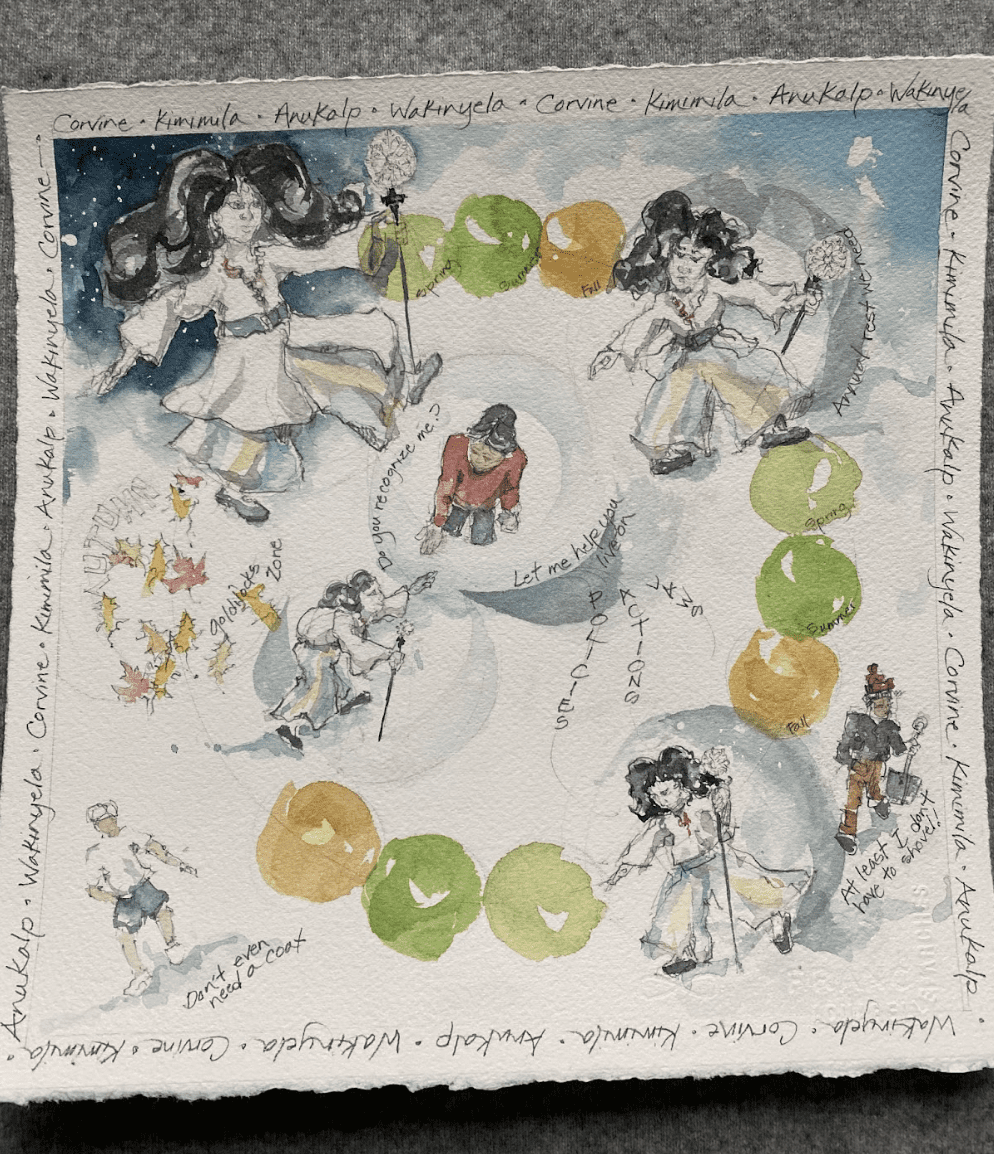
The artwork is envisioned as a circular composition representing the cycle of the seasons, and Corvine’s observed changes of winter over time. Beginning in the upper left, a strong, robust winter figure appears, followed by spring, summer, and fall rendered in flowing fields of color, moving clockwise around the circle. Winter then reappears at each cycle, gradually growing smaller, more bent, and less robust—symbolizing decline with each passing year.
The fourth winter figure is depicted as an aged figure using a cane, moving toward the center of the circle with the words, “Do you recognize me?” Kneeling before this figure is a form seen from above, representing the storyteller and their words “Let me help you live on… policies, actions, laws.”
I didn’t particularly dislike winter, but I preferred to stay inside and watch the snow fall from a safe, warm distance. At eleven years old, the short walk to my middle school was something I dreaded in the coldest months. It required me to tread through snow that got almost as high as my waist, which meant that getting snow in my boots was an inevitability.
As the years passed, my walks to middle school were replaced by drives to high school. Even so, I noticed the winter becoming less and less hostile. The fields of snow I’d once feared every morning and afternoon became shallow, then dissolved into slush. The sight of them made me anxious—I knew what climate change was, and I knew it was something to fear. I started to measure each winter against the ones from my early childhood, and I found each one to be disturbingly lacking.
My concerns were drowned out by those expressing relief around me. “At least I don’t have to shovel it,” I heard a neighbor remark at the pathetically thin layer of snow that was already starting to melt. “You don’t even need a coat to get the mail!” Another joked. To them, Winter’s decline was a blessing. I couldn’t help but feel dismayed at their lighthearted attitudes. Even when I ventured through their dismal chill, I never wanted Winter to change.
Winter is slowly dying with each passing year, and they seem to be gasping their last breaths. My frigid companion is losing their drudgery and bite, becoming more and more agreeable. Many are ready to put Winter in a retirement home; out of sight, out of mind. Some are delighted to abandon them, to let them wither away. Those who dreaded Winter don’t want to fight to protect them.
Despite their sharpness—rather, because of their sharpness—I refuse to let Winter flicker out. They offer us the annual rest we need, even if we refuse to take it anymore. They offer us beauty and peace, just as every other season does.
However, I am anxious about seeing Winter again. I fear they will be in even more pain than they were the last time I saw them. Last year, they couldn’t remember my name. They were meek and docile, occasionally able to hum and nod along to what anyone said. Now, I don’t believe they will recognize me.
The loss of Winter is an ache that only grows at every Autumn’s end. We should all yearn for a bitter Winter—the kind that I would have hated to walk home in from school, the kind that encouraged me to stay inside, the kind that watched over me as I drank hot chocolate and admired the crackling fire.
Corvine's Call to Action:
One can and should hold two truths at once; that a mild Winter is easier to deal with, and that a mild Winter is a sign of climate change that won’t just go away on its own. While the effects of individual actions on climate change shouldn’t be underestimated, the vast majority of carbon outputs are from large companies that have often gone woefully unchecked. Keeping an eye out for policies and making sure they receive the proper attention from the people we voted for is an important part of making sure that Winter lives on.