
Wakinyela: Four Lines Youth Storytelling
Four Lines: Youth Storytelling Project honors the voices of four youth—Corvine, Anukalp, Wakinyela, and Kimimila—who share personal stories of climate change grounded in reflection, lived experience, and place.
About the Author
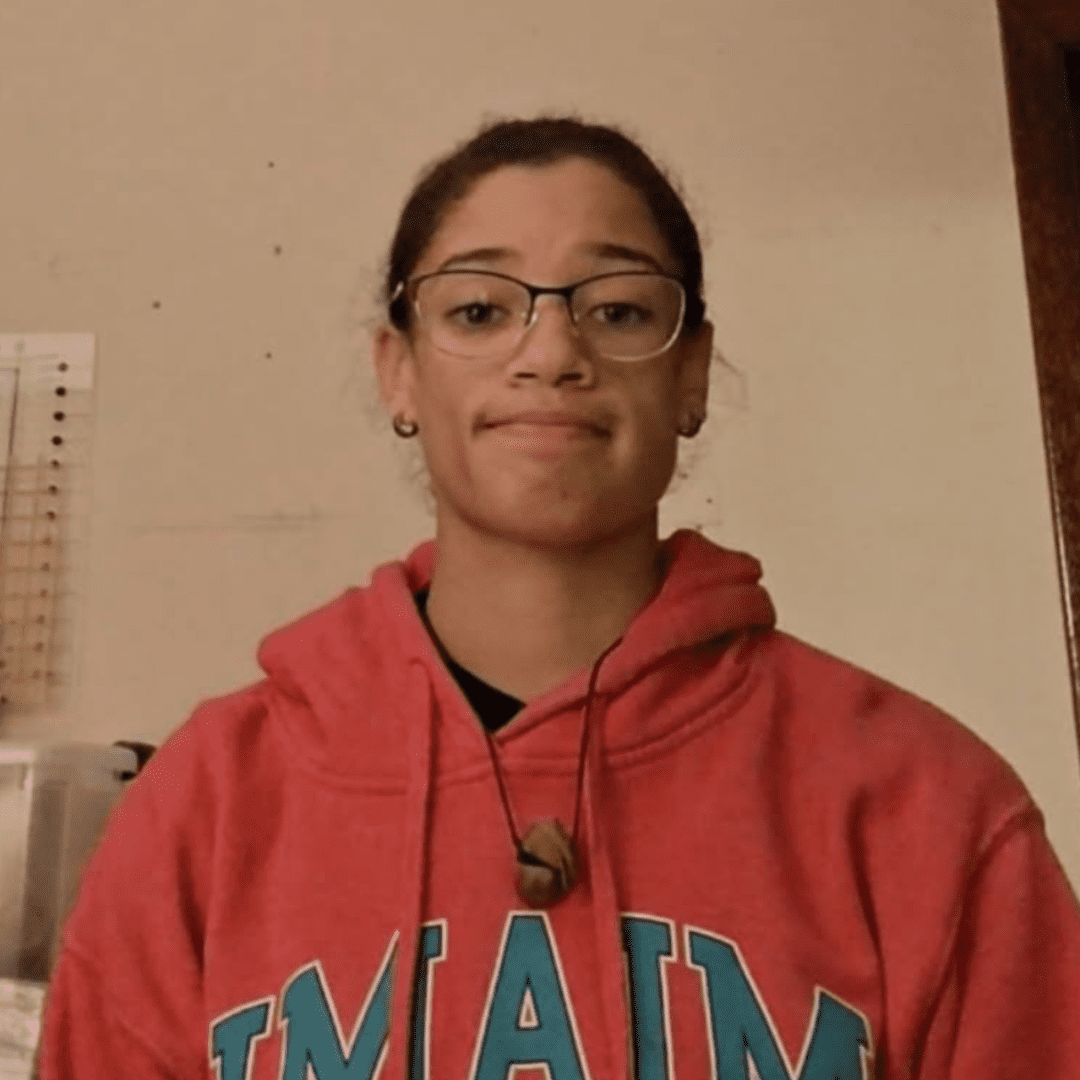
Wakinyela (she/her, age 15 when this story was written) is a Black, Native, White American. She was diagnosed with lupus panniculitis at the age of 7, and started chemo treatments at the age of 8. To navigate such life, she expresses herself through poetry and stories that reflect all that she’s ever desired in life.
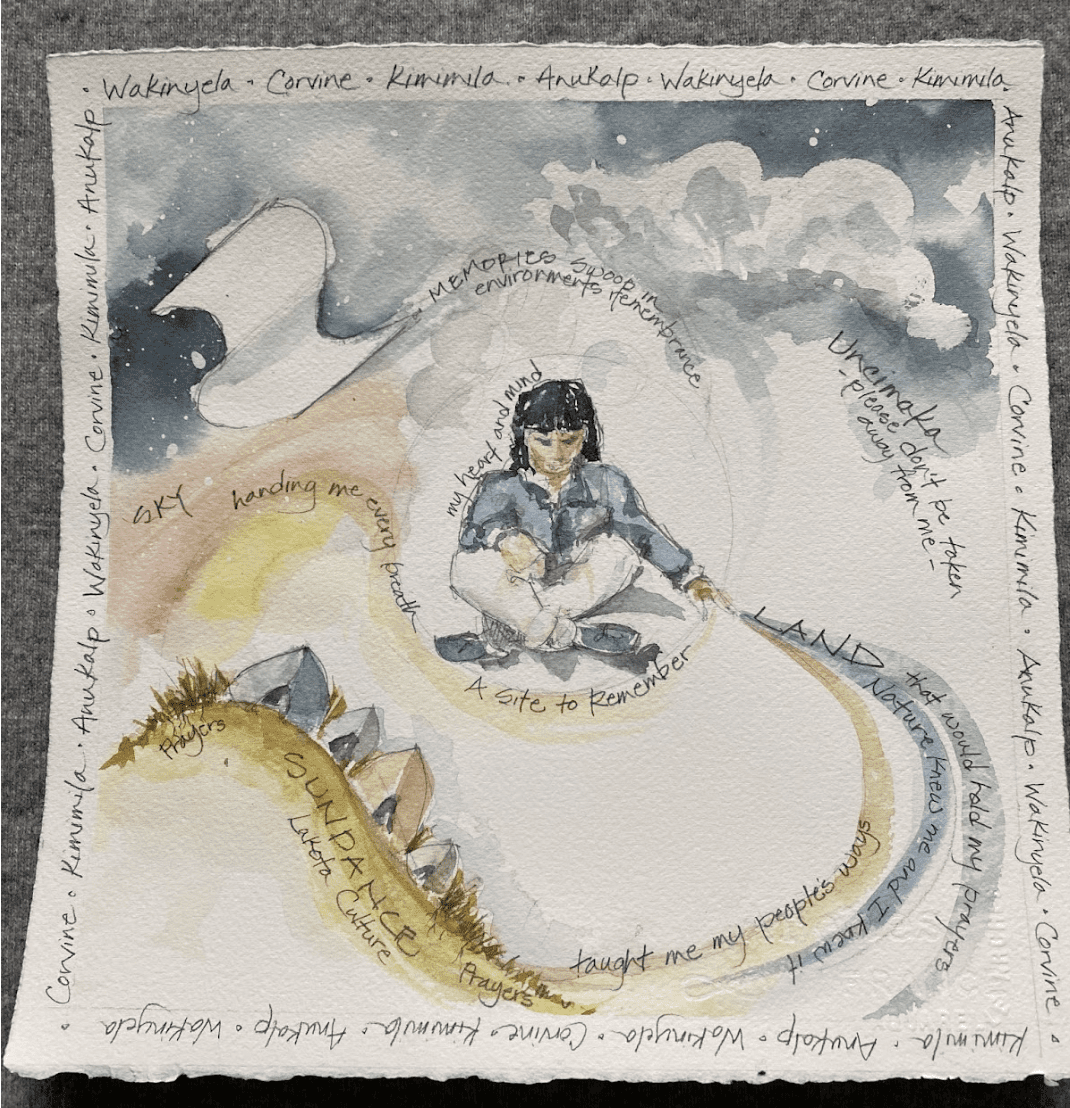
Wakinyela's Story Line
“My climate story would be a sight to remember.”
Author’s Note: “My climate story is about remembering. Nature is a part of who I am, it is the first place I felt belonged in. When I think about belonging in the environment, I can describe it as feeling like your soul being tethered to an unknown force. For no matter how far you go… you belong somewhere.”
A Sight to Remember (Audio)
A Sight to Remember (Transcript)
I sat here for a while, the page empty. It was tempting to write but in truth I had nothing to write about. That’s what I had thought…
But as I sat there, with no one around me, I took time to look upon the sky that would slip wings onto a revelation. A revelation about my connection with the natural world.
Memories swooped in, originated in the view far, for they were deeply embedded inside of my brain. I just needed a switch. A switch of low heights to the highest of the hidden meanings waiting for me.
The switch.
It was a sky’s switch that told me my climate story to let my need to lie go. I didn’t have to make up an empty sky of stories. In fact, it’s a bit embarrassing how clear the pathway was. I questioned if clouds were there initially? For the story was simply my life.
It was simply the environment’s recall of my heart and mind.
The climate story were experiences I was taught upon by Uncimaka. It was my soul’s desperation for the land to not strip its proximity of my touch. Please don’t be taken away from me was an ancient, familiar voice that fell from the sky. Nature knew me and I knew it. It was a main part of my Lakota culture. It taught me my people’s ways. It helped us through the rough skies and the smooth. Whether it be our medicine or our guide. It was always there for us.
It was always there for me, mocking my empty page of my cluelessness.
I still remember the first time I went to Sundance on my reservation. I was excited to learn the ways of my people, I was even satisfied just being around them. I remember my discovery of my pride. My memory always shows me the old bark sign. I don’t remember the title, for I named it with my first thought:
“I’m a part of something and that something was big and meaningful. And that something was a part of me.”
I was scared as we drove down the ragged dirt road. the scent of tobacco thick in the air. My chante/heart felt as if it could jump through my chest within every bump. My eyes squeezed shut. I kept on reassuring myself of my belonging here, despite being a city native.
Calmness didn’t arrive until I felt the ground’s bumps had halted, and I heard the truck doors slam shut. The sudden calmness was met with my courage to take a step in the land that would withold my prayers tight in our shared roots. After my feet were laid correctly, I looked up bravely. And man was it a sight to remember; there was tall grass surrounding us as if it were protecting the people within, different varieties of tents set up, and sounds of laughing voices traveled through the air like sugar to my ears.
We had no phones to block our sight upon us or earbuds to block the sound swifting in my climate story. The air.
It was us and the nature that had gathered around us.
I remember we had gotten there late as the sunset kissed my family’s skin delicately. The smooth warm colors painted on the sky. We all sat in silence admiring it.
My climate story would be called a sight to remember.
It is the great impact it had on my soul and on my heart.
It was the elders that spoke of the ground’s desire to be protected.
It’s the community around us teaching lessons, giving us medicine from the very nature we stood on.
The first place I felt I belonged in.
Even with the hard work that came along with it.
It was worth the knowledge and the belonging of it all.
I remember the silky stars that kissed the night sky with my tilted head and my eyes meeting the white spots.
I told myself I’d persevere with this sacred feeling in this sacred place.
I heard the protection calling for me beneath.
The sky handing me every breath, holding a dearness to my people.
That’s my climate story, that’s my climate impact.
About the Artwork
The artist was inspired by the vivid imagery within the text. The piece is grounded by a seated figure representing Wakinyela. Beginning in the upper left corner, opening with an “empty page” that unfolds into sweeping sky and clouds, reflecting the moment when “memories swoop in,” accompanied by the words Uncimaka or “Grandmother Earth” in Lakota.
Moving down the right side, the composition shifts into “Land,” illustrated by tall grass and tents drawn from the storyteller’s experience at Sundance, a sacred ceremonial gathering. The visual journey then wraps back up the left side into a warm sunset that fades into night, towards a quiet sky filled with “silky stars.”
Wakinyela's Call to Action:
My story represents freedom and identity. Because to me, nature isn’t just grass and a breath of fresh air. It’s a story that is told in tree roots, it’s a story told in the colors of the sky. It’s about how each star represents an ancestor. So when I take my nature walks and I think about my environment I only think of how to preserve this space, because it has preserved us.